

The High Desert Keeps Its Own Hours
In the high desert, light marks the hours and winter marks the year, and clocks are only a suggestion.
The road runs through the heart of the Great Basin, and the heart of the Great Basin is felt before it is seen. Long slopes of pale dirt lift out of sagebrush, then tip into wide valleys that hold all the light the sky can give. A barn stands alone mid-field, its red boards bleached to dusty rose. The air smells of dust and dry cedar, with a faint cool edge that says snow lives in the ranges. There is no town to enter, no line to cross. The basin simply begins, and continues, and the horizon stays exactly where it was an hour ago.
The afternoon light is the first thing a stranger notices and the last thing a resident forgets. It is a welder's torch of a light, clean and white, bringing every rock and board into sharp relief. Shadows are not smudges but true copies of the things that cast them. A fence post throws a stripe across the gravel that will move an inch every few minutes, and the eye cannot help following it.
Light on the Basin
People who live year-round in the high desert keep time by the light because the light keeps the hours. Winter mornings come slow, a gray bleed over the ridge long before the sun clears it. Summer evenings hold on until late, as if the day refuses to give the ground back to the dark. Between those seasons the light shifts quickly, and the people shift with it. They rise when the first brightness touches the east-facing windows and quit when the shadow of the western range climbs the barn wall. A clock on the kitchen wall tells the hour; the sun tells the time.
There is a particular quality to the afternoon in late autumn. The light turns gold and horizontal, and the whole basin seems to slow. The cattle stop grazing and face one direction, as if a signal has passed through the air. The light pools on the alkali flats and turns them from white to rose. The light at that hour has a weightless feel, as though the day has reached a peak and is deciding whether to go on.

The cold follows the sun down with a kind of eagerness. When the last rim of the disc drops behind the ranges, the air stiffens. A jacket left hanging on a fence post is brittle within the half hour. Nothing in the high desert argues with the sun.
Winter Keeps Its Own Calendar
Winter arrives not on a date but as an event. The first heavy snow comes over the north end of the valley, not through the pass, and by the time the afternoon is over the memory of the dirt road is only a raised line of grass stubble between drifts. The people who live through the year take this personally. They have wood split and stacked, a generator with a full tank, a pantry with more beans than anyone wants to count. They call it having been through December before.
The winter calendar is made of practical markers: the first night the pipes freeze, the first good snowpack on the high peaks, the morning the range cows start calving under a low sky. Months are less interesting than conditions. People speak of before the snow and after the runoff, not March and April. A mild winter is spoken of the way a good rain is: with the careful reserve of people who have seen the opposite and do not want to tempt it.
Distance gets strange in winter. The nearest paved road, the one that leads out to the larger world, can be closed for days without apology. No one calls it being trapped. It is just the way the country is. The people who stay know that a snowbound house is not a prison but a place with all the time in the world. They mend harness, oil guns, read old almanacs, and watch the window for the light returning. Time in the high desert is a pool that fills with the thaw.

During the long closed days, the silence is not an absence. It rings in the ears for the first week, then settles into the bone. By late winter, a person can hear the approach of a truck minutes before it tops the rise, and the sound is news worth stopping for.
The Long Distances Between
Space in the Great Basin does not behave like ordinary space. The valleys are so wide that a mountain at the far end appears to be an hour away, and then, an hour later, it still appears exactly that distance. The eye reads the scale wrong because there is no familiar object to compare. A single tree at a homestead claim grows no larger for a long, long while, and then, all at once, fills the windshield. The traveler learns not to trust the eye, and then learns to trust it differently. The mountain is not closer, but the atmosphere between the mountain and the road has thinned, and that counts as progress.
The distances also make the weather local. A storm can be falling on one side of the valley while the other side stands in bright sun. People will drive toward the clear patch and find it, or not, and the trip becomes a negotiation with the sky rather than with traffic.
Directions are given in landmarks, not numbers. The old fences, the single power pole, the white rock that marks a turnoff, the gap in the range where the wind always comes through. Newcomers miss the turnoff three times before seeing the pile of stones that was mentioned. This is not out of carelessness. The scale makes small things invisible and large things motionless. One learns to read the country the way a sailor reads water: by the surface, by the color, by the way the light lies on it.

The year-round people know exactly how long a drive takes by the light, not the odometer. A trip to the feed store in the morning is a certain length because the sun is in the south and the shadows point north. The same trip in the evening takes longer because the shadows go crosswise and the eye must slow to see. It is observation, kept from generation to generation like a tool.
The Year Comes Around
For the people who stay, the year is a circle laid over the valley. It turns with the first green of the bitterbrush in spring, the brief wildflower bloom that lasts a week and is gone, the dry lightning that starts fires on the far slopes, the first hard frost that kills the garden in an hour. They do not watch this from a distance. They are inside it, the way a fence is inside a field.
The high desert asks for patience and returns it with a strange gift. It teaches a person to wait without impatience, because nothing moves fast here and nothing needs to. The sun crosses the sky, the snow melts in its turn, the calves are born in the cold, the hay goes up in the heat. The calendar on the wall is a convenience, but it is not what governs the country. What governs is the slow turn of the light, the long shadow, the season's quiet argument with the one that comes after.
And that is the sense of time the high desert leaves with a person. It is that time is measured in things that are real: the angle of the sun, the depth of the snowpack, the distance to the range. Hours become less important than conditions. Minutes stop being the currency of a day. What remains is the morning light on the sage, the sound of wind in the fence wire, and the knowledge that winter will come and then go, and the basin will still be there, holding the light, keeping its own hours.
From the shop
Picked for this story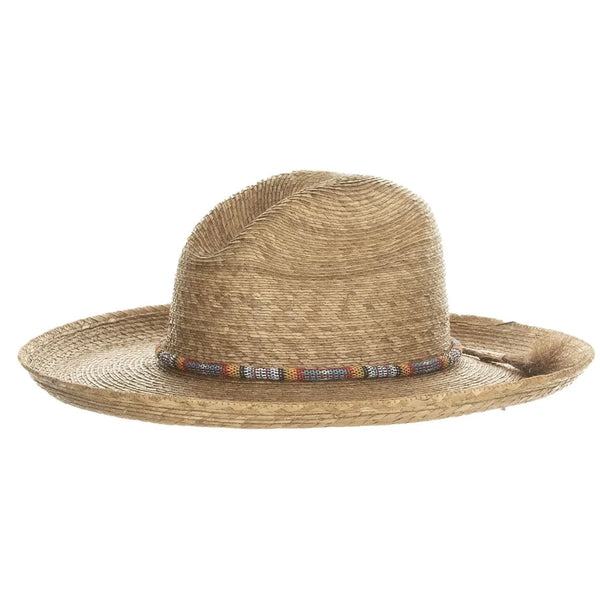
Justin Landry Wide Brim Fedora Hat
$82.98
Solid Faux Suede Hollowed Jacket
$25.44
Tomahawk Original Edition Sunglasses
$169.00
Western Silver & Faux Turquoise Diamond Concho Post Earrings
$12.99
Solid Denim Distressed Bib Pocket Wide Leg Overalls
$34.06
Solid Corduroy Zip-Up Pocketed Hooded Jacket
$23.45
Stripe Smocked Long Sleeve Button-Up Shirt
$17.03
Solid Mineral Wash Raglan Sleeve Raw Hem Sweatshirt
$24.10Read next
More from On the Road
The Ninth-Day Laundromat
Nine days in, a wash in a small town breaks the trip in two.

A Campfire, Put Out Cold
A campfire in the West is finished only when the ash can be sifted bare-handed.

The Boots on the Passenger-Side Floor
The boots ride on the passenger-side floor of the truck, carrying dust from three states and the smell of the work they are put to.