

The Pass Closes in October
For five months the only road out is snowed in, and a mountain community learns what it means to be entirely on its own.
October arrives twice in a mountain valley. The first time is on the calendar, broad and ordinary. The second time is the morning the air changes — when smoke from chimneys stops rising and lies flat along the rooftops, when the mountain out the window is no longer a blue shape but a gray wall laid against a gray sky. In the interior West, towns sit in valleys and roads leave by passes. One of those passes is the only road in or out for a community that spent the summer pretending winter would not come.
The road climbs out of the valley in switchbacks, holds to the side of a canyon for a long while, crosses the ridge through a shallow notch, and drops into the next drainage. In good weather the crossing is nothing to talk about. In winter it is not a road at all. Snow comes early and leaves late, and the gate near the bottom of the pass spends five months locked across the pavement.

The Last Trucks
In the weeks before the pass closes, the valley takes inventory. A semi backs up to the grocery store's loading dock, and people stop what they are doing to watch it unload. It carries the year's last taste of the outside: sacks of flour, cases of tomatoes, coffee in big cans, dog food, motor oil. The store's shelves fill in a way they will not again for many months. By the time the semi pulls out, the driver knows he has seen the last of the valley until spring.
At the feed store, the man who runs it has known for years how much grain the valley will burn. He orders accordingly, and the hay shed fills up in a week. People measure the winter by the line where the hay stops and the air begins. Firewood claims every porch. People cut, split, and stack through the fall until their backs complain, and then they stack a little more. The wood is the difference between a warm house and a cold one, and no one in the valley has to be told twice.

The rules are simple: full tank, full pantry, full prescription. A truck sits in the driveway with its tank topped off. The medicine cabinet holds enough for a siege. Some residents leave before the first storm — the ones who can work elsewhere, the ones who need care, the ones whose bones can't take the cold. Nobody blames them. The road was open, and they took it while they could. The ones who stay walk a little slower in late October, as if they are already moving at winter speed.
The Locked Bar
At the edge of town, where the road begins its climb, a striped bar hangs on a post. In summer it is swung flat against the fence and hardly noticed. After the first heavy snow it is swung across the pavement and locked. Behind it, the road climbs out of sight into a world that no longer belongs to the town.
The first weeks after the closing are the strangest. The road looks passable — a foot of snow, maybe a little more. It is possible to drive over it with chains. Some people have, and the telling is not approval. The road is a trick. Packed snow turns to ice, ice hides the edge, and the edge is not the real danger; the wind slab is. A road like this does not close lightly. It closes because staying open costs lives.
By December the pass is no longer a route. It is a landform. The snow fills the notch, smooths the switchbacks, buries the guardrail. There have been no plow tracks for weeks. The only marks on it are animal tracks, and the only mechanical marks are the sickle-shaped ones of snowmobiles, which use the road as a trail. The road has been given back to the mountains. It will be returned in spring.

The Long Quiet
What remains is a town with one door, and the door is shut. No semis come through, no delivery vans, no tourists looking for a place to eat. The highway department has moved its plows to lower ground. The street in town still gets scraped after every storm, but the work is smaller, closer, intimate. The snowplow driver knows every driveway.
The quiet takes getting used to. On the main street in midwinter, a person can stand in the middle of the pavement without looking either way. There is no traffic because there is nowhere to go, and there is nowhere to go because the one way out is gone. The cold is not a feeling; it is an object. Snow creaks under boots. Woodsmoke hangs in the air until the wind comes to take it. Stars come out early, and they are numerous in a way that surprises no one who lives there.
At night, the valley is a black bowl. The pass is invisible; the ridge is only a darker darkness. The silence is not an absence of sound but a pressure. Then a dog barks, or a roof sheds a load of snow with a thump, and the pressure breaks. After the thump, the quiet comes back thicker than before.

They are living. The valley spends its winter in particular ways: mending, board games, the slow repair of things put off since summer, the careful husbandry of frozen meat and canned goods. This is not a season of suffering. The long hush has its own richness. There is a reason people stay through it, and the reason is not stubbornness.
Thaw
Spring does not arrive with a date. It arrives as a change in the sound of the creek, a patch of bare gravel on the south side of the feed store, a softness in the haze above the pass. The closed road begins to seep. Water runs under the snow, mining it from below.
The first plow over the pass is an event the whole valley hears before it sees. The engine note climbs the canyon, stops, climbs again. People stand in their yards at the sound. The plow comes through the notch like a boat through a head sea, pushing a bow of white in front of it. Behind it comes the second truck, then a grader, then somebody in a pickup who has simply waited long enough. The gate bar is unlocked and swung flat. It is unremarkable. It happens every year. And every year a small line of vehicles forms — a pickup, a sedan, a delivery van — to be the first ones across a piece of road that for five months was not there at all.
The valley has not shut down. It has been busy, whole, complete. The door opens, and the outside world comes in with its trucks and its news and its hurry, and the valley meets it with the patience of a place that has spent a whole season doing necessary things.
From the shop
Picked for this story
Solid Sherpa Fleece Zip Up Hooded Jacket
$26.20
Stripe Colorblock Thermal Knit Drop Shoulder Sweater
$21.89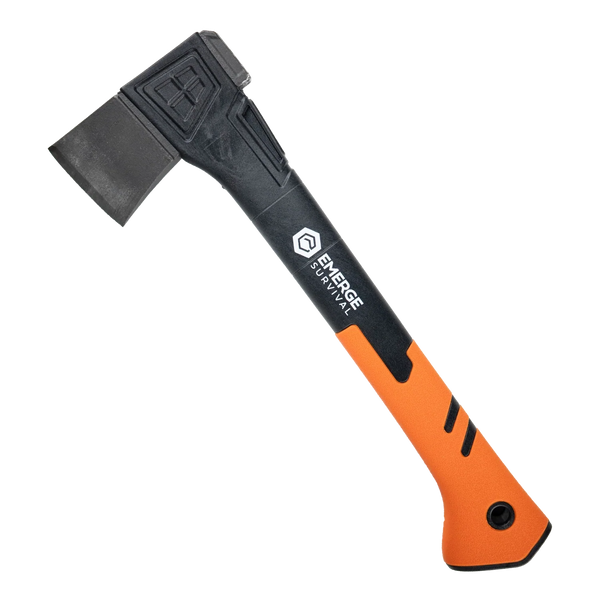
Survival Hatchet
$35.00
Dingo Topanga Leather Booties
$187.99
Cowboy Take Me Away Tee
$10.11
Plaid Button-Up Long Sleeve Pocketed Shirt
$17.65
Solid Zip Up Hoodie and Pants Set
$38.50
Floral Half Zip Kangaroo Pocket Drawstring Hoodie
$22.32Read next
More from On the Road
The First Hour of Open Road
A thermos filled the night before, a truck leaving before light, and the first hour of open road as the sky goes gray and then pink behind it.

The Storm Forty Miles Out
On the high plains the storm is visible for an hour before it arrives — lightning with no sound, and the smell of rain coming up the road ahead of it.

The Hot Spring After Dark
The road ends in sagebrush and the pool waits in the dark, steaming against a cold sky.