

The Best Part of a Road Trip Is the Drive Home
The return leg is where a trip across the West settles into memory — and where the holiday slips away.
The drive home is the best part of a road trip.
The leg with nothing left to prove
The case for it begins in the morning, at the motel near the freeway, when there is nowhere to be. The duffel is packed differently from the way it was packed at the start: the clean shirt on top because it never got worn, the damp jacket forced to the bottom, the finished book in the glove box. The route is just as long as it was on the way out, but the return leg feels shorter because it is all behind. There is no last waterfall to reach, no final overlook to check off. The traveler has seen what came to be seen, and the driving is the whole point.

Along the north Pacific coast, the return leg begins as a run of gray-green and then loses the gray as the road turns inland. The pass that took an hour on the way out is a downhill coast on the way home. The high desert unrolls in the late afternoon light, and the towns that were a blur on the way out get a second look: the water tower painted with a name, the feed store with its door propped, the roadside monument whose plaque the driver reads one line at a time. Nothing has to be seen today, so everything is.
The car itself keeps the score. The floor mats carry sand or pine needles from the first stop; the cup holders hold a collection of bottle caps; the dashboard is sticky where a soda spilled on day two. The radio loses one set of stations and finds another, and the same two-lane that ran east in the morning now runs west, so the light falls from a different side. The mountains that seemed like obstacles on the way out are just scenery on the way home. The climb is a place now, not an effort. The wind off the range has stopped being a complaint and become a sound the trip makes.
This is the case for the return leg: it is the only part of a trip that belongs to the driver alone. The outbound leg is full of schedule and expectation, of things someone said the traveler could not miss. The return leg answers to nobody. It is the difference between reading a book to find out what happens and reading it again to see how it worked.

At a rest area in the middle of the day, the driver recognizes, on a stranger's camp chair, the same paperback that was on the motel's lost-and-found shelf. Neither speaks. The wind moves through the sage, and the silence is not the uncomfortable kind. It is the kind the trip has been trying to make all along.
But the drive home is also the end of the drive
But the return leg is the one part of the trip with no destination worth the name. A trip does not end at the front door; it ends at the first ordinary thing the driver must attend to — the mail, the lawn, the meeting tomorrow. The return leg is the only direction in which every mile subtracts from the trip. On the way out, the miles added to something; on the way home, they only remove it. The same landmarks appear smaller and plainer in the eastward light. The pass that seemed heroic at the start is just a road today.
The strongest case against the return leg comes in its final hour, when the radio station that carried the trip for three states begins to crackle and fade, and the car smells less like the road and more like the commute. Seats that spent the trip being adventure are just seats again. There is a moment, at the interchange where the interstate splits toward the airport and the suburbs, when the driver takes the off-ramp without having decided to — and the trip is over one exit sooner than it needed to be. The cooler holds one last, sad can of something lukewarm, and nobody wants to be the one to throw it away.

Unless the return leg is where the trip actually gets finished. The outbound leg collects places; the return leg collects what the places did. That is why the same road feels different in reverse: because the driver is different in reverse. The desert did not change overnight, but the way a person crosses it did. The monument that was a line on the map this morning gets a quarter-hour at noon because there is no deadline. The man at the feed store waves the same wave he waved on the way out, but this time the driver waves back. The radio crackles, and then a station too far away to reach tomorrow plays something worth turning up.
What settles it is the moment the engine goes off in the garage. The hood is still warm enough to hold a hand against. The sand stays on the floor mats for one more week, and the finished book stays in the glove box until the next trip needs it.
From the shop
Picked for this story
Solid Half-Zip Textured Patchwork Sleeve Hoodie
$22.12
Stripe Buttoned Wide Leg Pants
$14.55
Decoy Arctic Edition Sunglasses
$169.00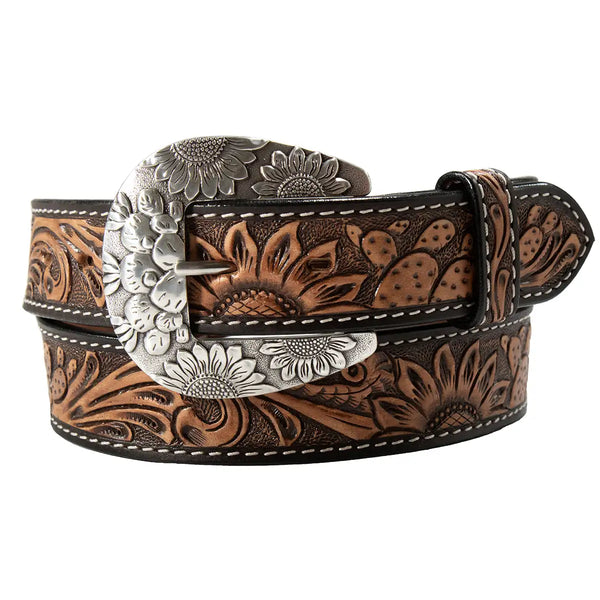
Angel Ranch Desert Bloom Leather Belt
$70.00
Love All-over Print Windbreaker Jacket
$12.99
Stripe V-Neck Flare Sleeve Tiered Mini Dress
$25.16
Western Teardrop Statement Earrings with Stones
$14.99
Western Faux Turquoise Cluster Hair Tie
$16.99Read next
More from On the Road
Following the River Down
From a cold spring in the willows to the wide water of the basin: a day following the river downstream.

The Load Goes In the Night Before
Before a long trip across the West, the loading is done in the dark of the driveway, and the strap is what the whole run depends on.

Eyes at the Edge of the Road
Out past the last town light, the two-lane crosses open range, and the dark keeps a record of everything that passes through it.