

The Year Begins After Labor Day
The calendar says January, but the school bus and the football season know better: September is the new year.
The year begins after Labor Day, not on the first of January. You know this the way you know a coming storm in your knees, the way you know the light has changed even before the temperature does. The proof is everywhere, once you start looking for it.
The Case for September
The yellow school bus appears at the end of the driveway, and the whole rhythm of the household snaps to attention. What did we do all summer? We forgot what day it was. We ate dinner at nine and let the dishes sit. The calendar pages turned meaningless, one long weekend bleeding into the next. Then the first Tuesday after the first Monday arrives—Labor Day, the hinge—and the next morning the bus grumbles down the street at 7:12, and suddenly there is a schedule again. The first bell is a starting pistol.
At the office, the air conditioning hums less. The manager who took Fridays off all August is back at her desk by 8:30, and she asks for the quarterly numbers with a voice that means business. The coffee pot fills and empties twice before noon. The thick spiral notebooks appear on sale at the big-box stationery aisle, next to the three-ring binders and the packs of Bic pens, and people who haven't written anything by hand since May buy them anyway. A new notebook is a promise. You never buy a new notebook in January; January is for paying the credit card bill and changing the battery in the smoke detector. September is for starting.

Football returns, and not just the pro games on television. The high school field lights come on at dusk, and the band practices on the grass, and somebody's dad strings the first-stringers' helmets onto a rack. The smell of the field—damp chalk, cut grass, the sharp cold of the quarter—is the smell of the year turning. Even in towns where the team loses every Friday, the ritual holds: the bleachers, the halftime, the concession stand selling hot chocolate long before you need it. That is not a weekend event. That is a season, which is exactly what a year should be made of.
The church calendars and the civic calendars and the PTA calendars all turn on the same axis. Committees reconvene after Labor Day, because everybody is back from somewhere, even if they only went to the backyard. The fall craft fair is announced in the bulletin, the harvest supper is assigned a date, the food pantry puts out its sign-up sheet for Thanksgiving baskets—two months early, because that is how the church does things, planning ahead. The public library's story hour, suspended for the summer, starts up again on the second Wednesday of September, and the same mothers who saw each other at the pool now see each other in the children's room, wearing real shoes.
What else would you call a new year if not this? January begins in darkness, in cold, in the stripped aftermath of Christmas. It is a month of taking things down and putting things away. September begins in action: the bus, the bell, the first down, the fresh binder, the new teacher, the pile of forms to sign. Nobody has to resolve to do anything in September, because the year itself is already doing it.

The Case Against It
But the strongest argument for January is that it lines up with what the machine actually counts. The tax man, the insurance agent, the bank—they all start the year on the first of January, and they do not know about the school bus. The new year's ball drops in Times Square, and the gym fills up with people who signed a contract and will quit by mid-February. January has its own truth, a clean and desolate one: the calendar resets, the debts come due, the holidays are over, and whatever you have to change, you change now, because no other moment is offering itself. September cannot be the new year because it does not offer a fresh slate; it offers a continuation. School resumes, which means it had paused. The football season is a new season, but the league was there before and will be there after. January says: the year is over, begin again. September says: you had a break, now return to what you were doing.
There is also the tiredness. January is cold, but September is frantic. The first week back is a scramble of forms and schedules, of meetings and missed connections. The freedom of summer is gone, and what replaces it is not a hopeful beginning but a list of obligations. The school year is relentless: by Thanksgiving you are exhausted, by spring break you are hanging on. Nobody feels new in late October, when the novelty has worn off and the daylight is draining. A new year should have a moment of stillness, a midnight, a countdown. September has a school lunch and homework.
Except—here is where it lands—the reason September feels like the new year is that it is the one that matters to the people who do the living. January is an administrative agreement, a date we all accept so that the W-2s and the property taxes have somewhere to begin. September is visceral. The light is lower, the air is sharp, the morning has a weight to it that July never had. The year after Labor Day is not a calendar year; it is a campaign, a term, a growing season. It runs from the first bell to the last bus in June, and it contains more change, more effort, more actual living than all twelve months of the official one. So go ahead and file your taxes in April. The year began eight months ago, when the buses ran and the coffee went off and you bought a notebook you still haven't filled. That is the one you will look back on.
From the shop
Picked for this story
Here for Now Color Block Hoodie in Pink
$36.00
Unwavering Loyalty Raglan Sleeve Top
$31.00
Jackie Mid Rise Flare Jeans with Front Flap Pockets
$79.00
Woven and Worn Tote in Ivory
$68.00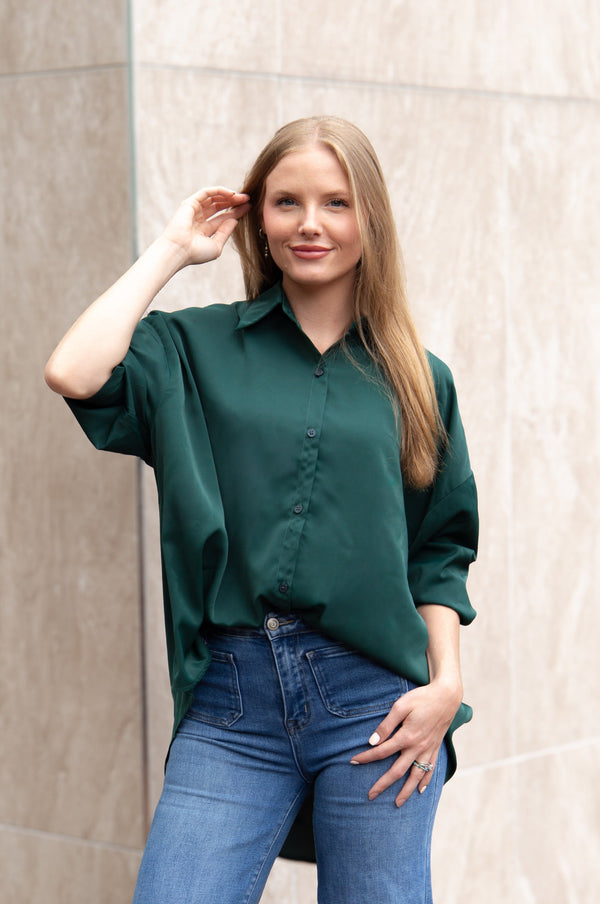
Kathryn Classic Button-Up Blouse
$39.00
Silver Lining Cardigan
$24.00
From the 1900s Graphic Tee
$29.99
Terrific Texture Scoop Neck Top
$28.00Read next
More from Moments
The Lights Come On in September
In September, a small town gathers itself around a field of lights, and the whole week points toward Friday.

The county fair after dark
The midway lights, the 4-H barns, the children asleep in the straw, and the long walk back to the car across the dark field — one August night at the fair.

The Last Day of Summer Vacation
The last day of August is one long wait — a late breakfast, the new shoes, the last swim, and a backpack packed for morning.